

About the Journal

Journal of Economics and Financial Affairs (JEFA) is a peer-reviewed international journal published by Spider Publisher, dedicated to advancing rigorous scholarship in economics, finance, and allied quantitative disciplines. The journal provides a dynamic platform for academics, researchers, policymakers, and financial practitioners to disseminate innovative theoretical and empirical research that deepens understanding of economic systems and financial markets. JEFA welcomes original research articles, review papers, meta-analyses, methodological advancements, and policy-oriented studies that demonstrate strong analytical foundations and real-world relevance.

Journal of Economics and Financial Affairs (JEFA) publishes articles on quarterly basis, specifically in March, June, September, and December, each year four issues. But the articles come to online immediately upon acceptance and have a DOI for fully citable.

No fees/APC will be charged for articles, and no surcharges will apply for the length of an article, for illustrations and figures (including color figures), and for supplementary data unless noted otherwise.  

Announcements

Journal of Economics and Financial Affairs (JEFA) Is Now Indexed in EconPapers

2026-10-30

The Journal of Economics and Financial Affairs (JEFA), published by SPIDER Publishing, is pleased to announce its inclusion in EconPapers, an established online resource for economics research. This milestone further strengthens the journal’s discoverability and accessibility, expanding opportunities for researchers and academics worldwide to find and engage with its scholarly publications.

Read more about Journal of Economics and Financial Affairs (JEFA) Is Now Indexed in EconPapers
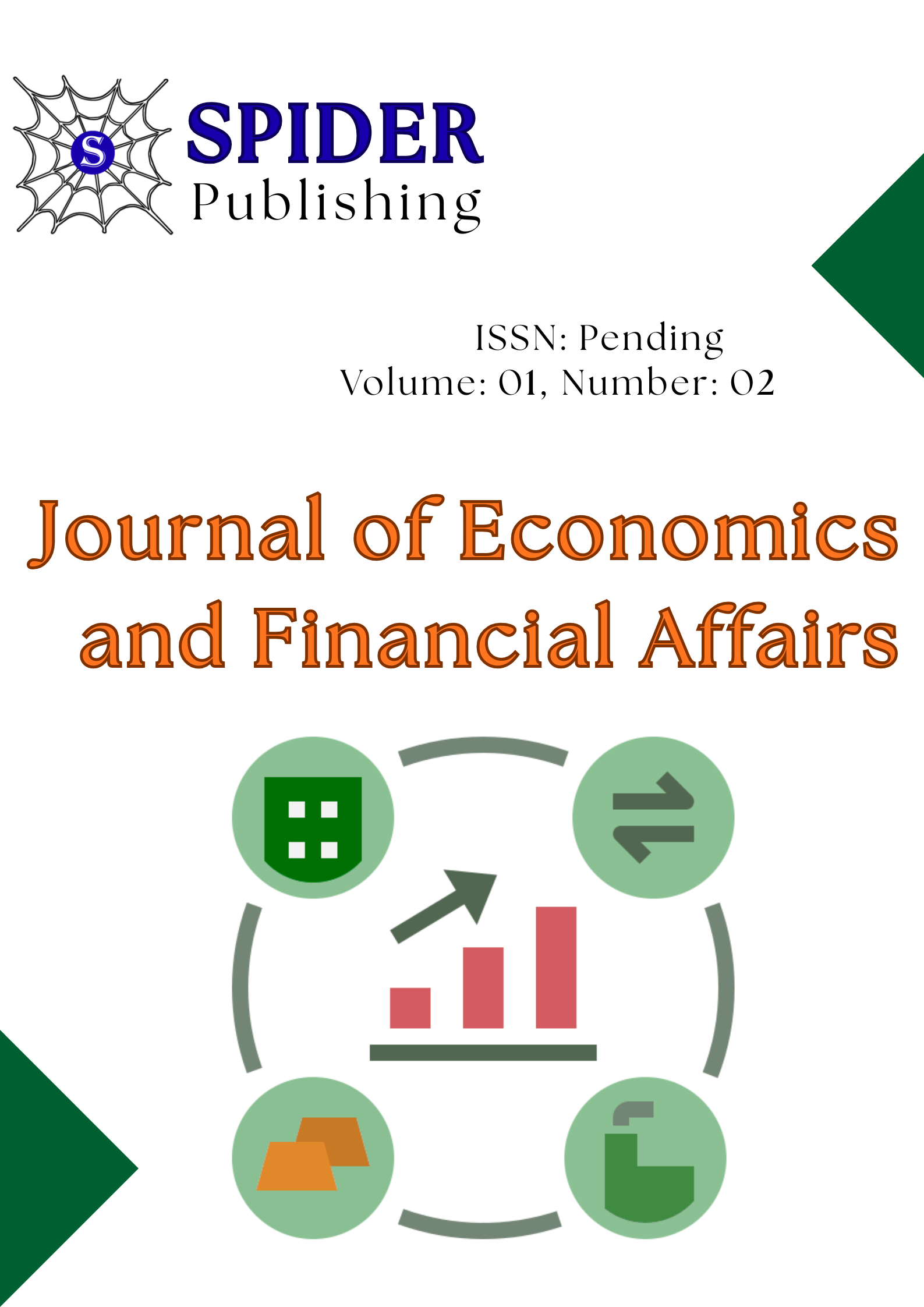
Current Issue

Vol. 1 No. 2 (2026): September
					View Vol. 1 No. 2 (2026): September

Volume 1, Issue 2 (September 2026) of the Journal of Economics and Financial Affairs (JEFA) brings research articles examining contemporary issues in taxation, household finance, poverty alleviation, foreign direct investment, globalisation, and income inequality. The contributions cover both country-specific and cross-country perspectives, with particular attention to Bangladesh, the MENA region, and BRICS economies. The articles investigate the mediating role of tax planning effectiveness in the relationship between taxation policies and corporate financial performance; the role of financial literacy in household financial decision-making; the contribution of microfinance to poverty alleviation in Bangladesh; the relationship between foreign direct investment and economic development; and the mechanisms linking globalisation, labour-market outcomes, and income inequality. The issue employs a range of empirical approaches, including mediation analysis, household-level evidence, and dynamic panel methods. The articles contribute to ongoing discussions in economics and financial affairs by providing empirical evidence on fiscal policy, financial behaviour, development finance, international investment, and inequality.

Published: 2026-09-30
View All Issues